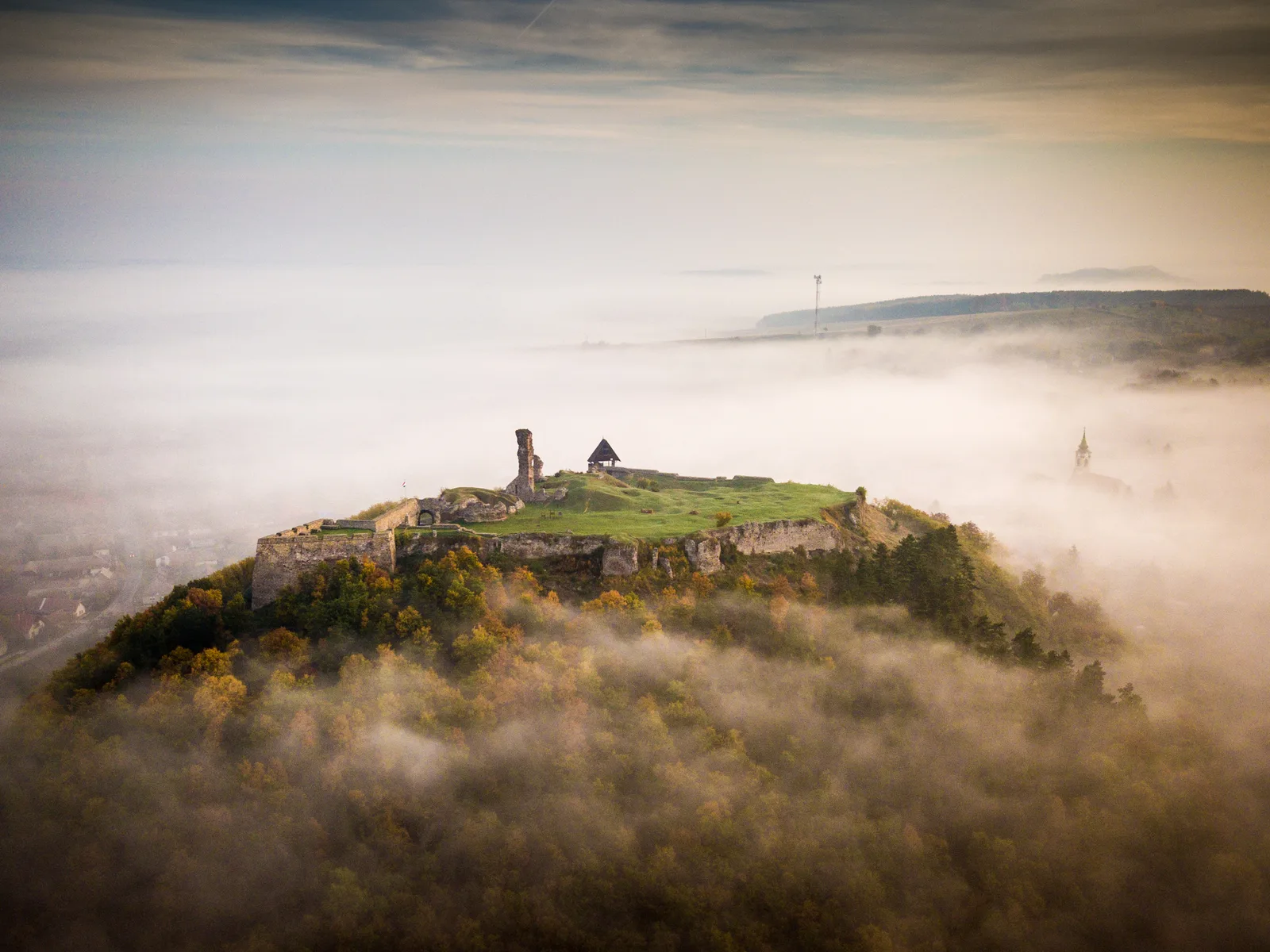
The New Bastion has an unparalleled panorama and is currently the highest visitable point of the castle. The bastion is a classically designed so-called Italian-style bastion: thanks to its angular design, it has no blind spots, the surrounding wall sections can be perfectly defended from it, while its own outer wall planes can be fired upon from the neighboring defensive works. This feature provided the advantage of Italian bastions, and this led to the development of fortresses: zero blind spots, zero opportunities for the besieger.
An interesting feature of the New Bastion is that its tip points exactly west, as if it had been planned that way. In its center, a national flag was erected in 1936, which celebrated the territories returned to Hungary under the Vienna Awards – and the flag was only to be fully hoisted when all the annexed territories were returned. In the winter of 2010-11, a cavity formed under the pedestal, causing it to tilt life-threateningly, making its relocation necessary. Thus, it ended up in its current place, on the wall section opposite the gate, on the 75th anniversary of its erection.
Another interesting feature of the bastion is the carved stone with Latin text placed in the eastern wall plane. Unfortunately, the inscription is damaged, but mostly legible – yet it still causes a lot of headaches. According to the text, "the castle was repaired by master stonemason P, in the year of our Lord 1672". The problem, however, is that in 1672 the castle was in Turkish hands, so they would hardly have had the walls repaired by Christian masters, and even if they had, they certainly would not have allowed the placement of a Latin plaque. Unraveling the mystery awaits future researchers.
We continue the tour with the inner castle; see you at the barbican – the semicircular building to your left as you enter the gate.