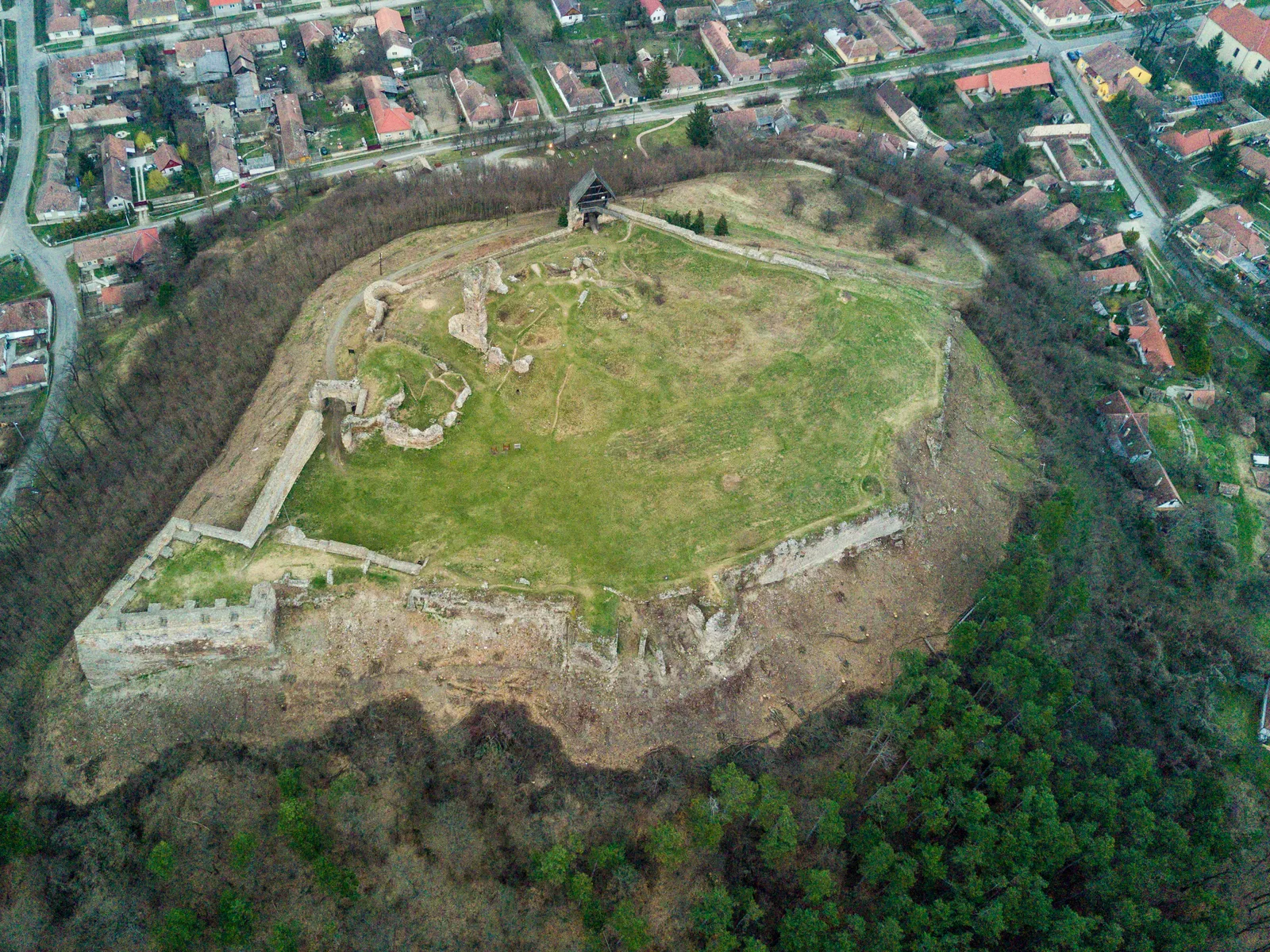
The southern side of the castle was once protected by the pentagonal Empress Bastion, from which the southern plane of the New Bastion and the entire southern wall section could be controlled and kept under fire. Unfortunately, the bastion has remained in a very ruined state, with only its two edges and the internal reinforcing walls visible, which help imagine its former structure and size, which roughly matched the New Bastion.
You have probably already pondered why only this much remained of the entire castle, so we will now reveal the reason. Nearing the end of the Ottoman-Hungarian wars and the Turkish occupation, in 1685, according to surviving sources, lightning struck the castle's gunpowder storage, and the explosion blew most of the castle into the air. The Turkish commander at the time, Csonka Bey, decided to abandon the castle. But this was not the true final chapter in the castle's military history: during Rákóczi's War of Independence, the Kuruc troops occupied it and began reparations, as well as search for the aforementioned treasures. Towards the end of the war of independence, however, they decided that there was no point in devoting time and resources to maintaining the castle, so they blew it up, rendering it unusable for any military purpose.
Although many castles in Hungary were destroyed on the orders of the Habsburg Emperor after the war of independence, Nógrád's fate was sealed by the hands of the Kurucs.
The final station of the tour follows, at the Széchenyi memorial plaque opposite the gate.